Twisted Pair Cable Explained: Types, Advantages & Applications
In the world of modern communication, where seamless connectivity is paramount, the unassuming Twisted Pair Cable plays a pivotal role in ensuring efficient data transmission. This unheralded hero forms the backbone of countless networks, connecting us to the digital universe. In this article, we’ll unravel the secrets of Twisted Pair Cable, exploring its construction, types, advantages, and ubiquitous applications.
Understanding Twisted Pair Cable:
Twisted Pair Cable, simply referred to as “Twisted Pair,” is a type of copper cable composed of two insulated copper wires twisted together in a helical manner. The twisting of the wires is not merely for aesthetics but serves a crucial purpose – reducing electromagnetic interference and enhancing signal integrity.
Construction and Types:
Unshielded Twisted Pair (UTP): UTP is the most common type of Twisted Pair Cable used in everyday applications. It consists of two twisted copper conductors, each insulated with a color-coded plastic sheath. UTP cables are cost-effective and suitable for short to medium-distance data transmission, making them ideal for Ethernet connections in homes, offices, and data centers. Read more about Unshielded Twisted Pair Cables.
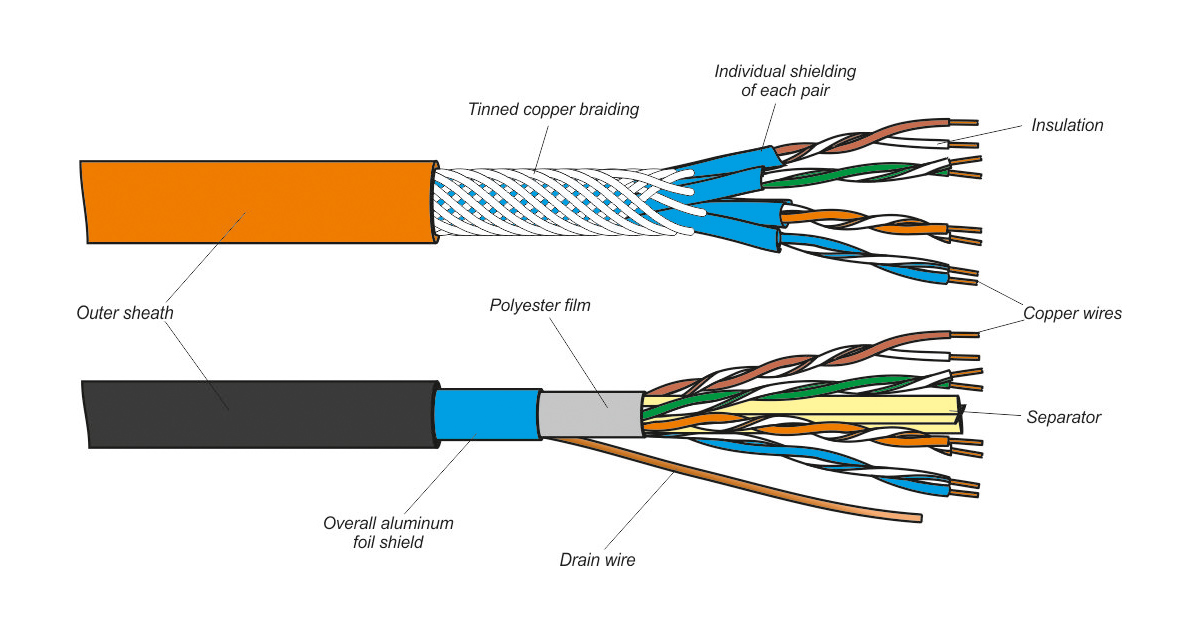
Shielded Twisted Pair (STP): STP features a layer of metallic shielding around the twisted copper pairs, which provides better protection against external electromagnetic interference. The shielding prevents crosstalk between adjacent cables and makes STP more suitable for environments with high electromagnetic interference, such as industrial settings. Read more about Shielded Twisted Pair (STP) Cables.
Foil Twisted Pair (FTP): FTP is a hybrid of UTP and STP. It comprises twisted copper pairs with an overall metallic foil shield, enhancing its resistance to interference and crosstalk. FTP cables are commonly used in structured cabling systems, ensuring reliable data transmission in commercial installations. Read more about Foil Twisted Pair (FTP) Cables.
Advantages of Twisted Pair Cable:
Affordability: Twisted Pair Cable, especially UTP, is cost-effective, making it a popular choice for networking in various settings, from small businesses to large enterprises.
Ease of Installation: Twisted Pair Cables are flexible and lightweight, allowing for easy installation and termination. They can be used in both indoor and outdoor environments, depending on the specific cable type.
Noise Reduction: The twisting of the copper pairs reduces electromagnetic interference (EMI) and radio frequency interference (RFI), resulting in clearer data transmission and minimal signal degradation.
Versatility: Twisted Pair Cables support a wide range of data rates, making them suitable for various applications, from voice communication to high-speed data transfer.
Applications of Twisted Pair Cable:
Ethernet Networks: Twisted Pair Cables, especially UTP, are the standard choice for Ethernet connections in homes, offices, and data centers. They are used to establish local area networks (LANs) and connect devices to the internet.
Telephone Systems: Twisted Pair Cables have been the backbone of traditional telephone systems for decades, providing reliable voice communication services.
Structured Cabling: Twisted Pair Cables are an essential component of structured cabling systems, enabling data, voice, and video transmission within commercial buildings.
Industrial Applications: In industrial environments, Shielded Twisted Pair (STP) and Foil Twisted Pair (FTP) cables are deployed to ensure robust data communication in the presence of heavy machinery and electromagnetic interference.
Conclusion:
Twisted Pair Cable may appear unassuming, but its impact on modern communication and networking is undeniable. From local area networks to telephone systems, Twisted Pair Cables serve as the invisible threads connecting us to the digital world. Their affordability, noise reduction capabilities, and versatility have made them the go-to choice for data transmission across diverse applications. As technology continues to evolve, the Twisted Pair Cable will remain an indispensable tool, steadfastly supporting our ever-growing need for seamless connectivity.