What Are Solar Flares and How Dangerous Can They Be?
Solar flares are powerful bursts of radiation that emanate from the sun's surface, releasing vast amounts of energy into space. These dynamic events are not only a spectacular display of nature’s power but also pose potential risks to our modern technological infrastructure and, in rare cases, human health. In this article, we explore what solar flares are, how they occur, their potential dangers, and the measures taken to mitigate their effects.
What Are Solar Flares?
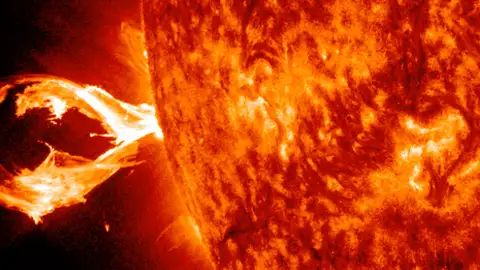
Solar flares are intense eruptions of electromagnetic radiation originating from the sun's atmosphere. They occur when magnetic energy that has built up in the solar atmosphere is suddenly released. This energy is emitted across the entire electromagnetic spectrum, from radio waves to gamma rays. Solar flares are often accompanied by coronal mass ejections (CMEs), which propel charged particles into space.
Key Characteristics:
High Energy Output: Solar flares can release energy equivalent to millions of nuclear bombs.
Broad Spectrum Radiation: They emit X-rays, ultraviolet light, and other high-energy particles.
Short Duration: While the most intense flares last only minutes, the effects can linger for hours or days.
How Do Solar Flares Occur?
Solar flares typically form in active regions around sunspots—areas where the sun’s magnetic field is particularly strong. The process includes:
Magnetic Field Reconnection: Twisted magnetic fields snap into place, releasing stored energy.
Energy Release: The rapid conversion of magnetic energy heats the solar plasma, generating a burst of radiation.
Particle Acceleration: Electrons and protons are accelerated to near-light speeds, contributing to the flare’s intensity.
Potential Dangers of Solar Flares
While solar flares themselves do not directly harm humans on Earth, their associated effects can be dangerous, particularly to our technology and infrastructure.
1. Impact on Satellite Communications
Signal Disruption: High-energy radiation can interfere with satellite operations, affecting GPS navigation, weather forecasting, and telecommunications.
Satellite Damage: Increased radiation levels may damage satellite components, shortening their operational lifespan.
2. Effects on Power Grids
Geomagnetic Storms: Solar flares can trigger geomagnetic storms that induce electric currents in power lines, potentially causing transformer damage and widespread blackouts.
Grid Instability: Fluctuations in the Earth's magnetic field during a solar storm can lead to unpredictable power surges.
3. Radiation Hazards for Astronauts and Aircraft
Increased Radiation Exposure: During a major solar flare, astronauts and high-altitude flight crews may be exposed to elevated levels of ionizing radiation, which can pose health risks.
Space Mission Risks: Solar flares are a significant concern for manned space missions and satellite-based operations.
4. Impact on Radio Communications
HF Radio Blackouts: Solar flares can cause high-frequency (HF) radio blackouts, affecting emergency services, aviation communications, and maritime operations.
Navigation Disruptions: Disturbances in radio signals can lead to inaccuracies in navigation systems.
Mitigation and Monitoring
Due to their potential to disrupt modern technology, continuous monitoring of solar activity is crucial. Space weather forecasting centers and satellites, such as NASA’s Solar Dynamics Observatory (SDO), track solar flares and provide early warnings to mitigate their impact. Measures include:
Improved Satellite Shielding: Designing satellites to withstand higher levels of radiation.
Grid Protection Systems: Implementing safeguards in power grids to manage surges induced by geomagnetic storms.
Operational Protocols: Adjusting flight paths and mission schedules during periods of intense solar activity.
Conclusion
Solar flares are a natural and powerful phenomenon that highlight the dynamic nature of our sun. While they add beauty and scientific intrigue to our understanding of space, they also present real dangers to modern technology and infrastructure. By monitoring solar activity and developing robust mitigation strategies, scientists and engineers work tirelessly to protect our satellites, power grids, and communication networks from the disruptive effects of these cosmic events.