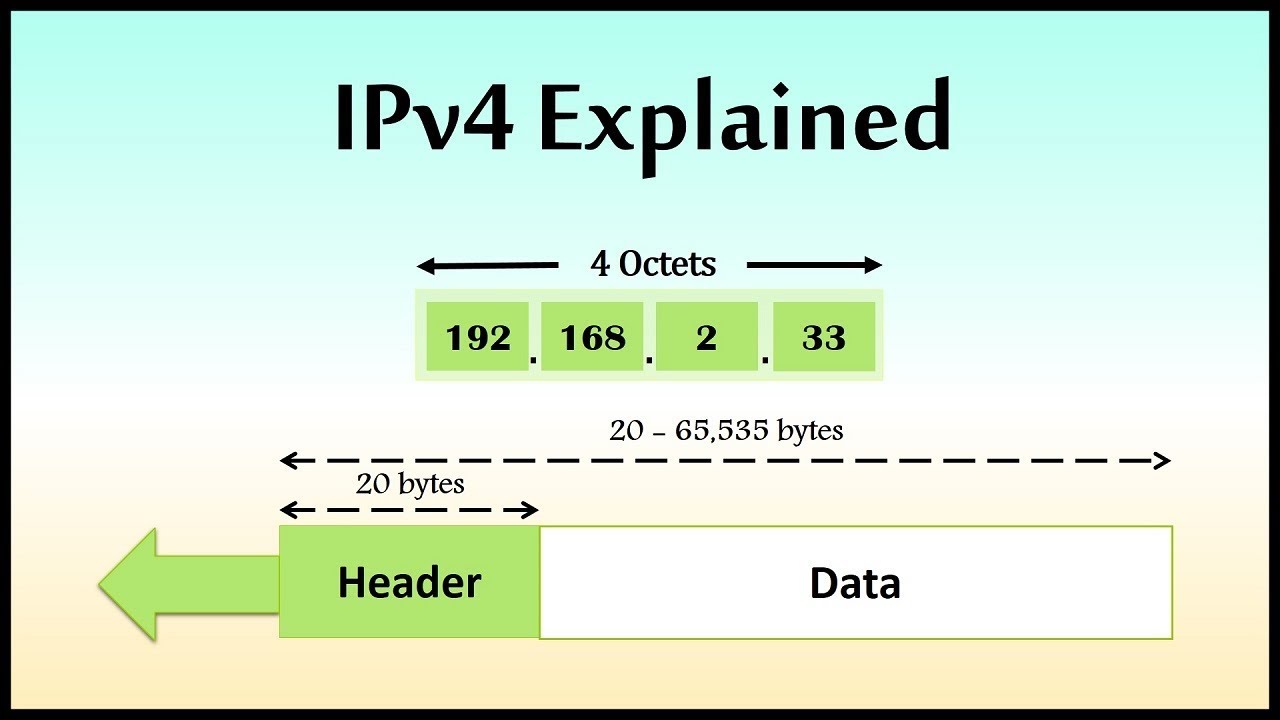
IPv4 Datagram Format: Service Type, Identification, Flags, & TTL Bits
In the realm of computer networking, the Internet Protocol version 4 (IPv4) stands as the bedrock of data communication. IPv4 datagram format governs how data packets are structured and transmitted across networks. Each IPv4 datagram comprises several essential fields, including the Service Type, Identification, Flags, and Time to Live (TTL) bits. In this article, we will delve into these crucial components of the IPv4 datagram format, unraveling their significance and impact on data transmission.
Service Type (Type of Service – ToS):
The Service Type field, also known as the Type of Service (ToS) field, serves to prioritize or differentiate the handling of IPv4 datagrams. The field is used to indicate the desired quality of service for the packet. The ToS field is 8 bits long and is used to mark packets with specific characteristics, such as high priority, low latency, or high throughput.
Identification:
The Identification field is 16 bits long and is used to help the receiving host reassemble fragmented datagrams. When a large packet needs to be transmitted over a network with a smaller Maximum Transmission Unit (MTU) size, it is divided into smaller fragments. The Identification field ensures that the receiving host can properly reassemble these fragments to reconstruct the original packet.
Flags:
The Flags field is 3 bits long and is used in conjunction with the Fragment Offset field to manage packet fragmentation. The three possible flag bits are:
Bit 0 (Reserved, Must be 0): Reserved for future use and should always be set to 0.
Bit 1 (Don’t Fragment – DF): When this bit is set to 1, it indicates that the packet should not be fragmented. If the packet’s size exceeds the MTU of a network it needs to traverse, it will be dropped, and an error message will be sent back to the sender.
Bit 2 (More Fragments – MF): When this bit is set to 1, it indicates that more fragments of the original packet follow the current fragment. It is used in conjunction with the Fragment Offset field to identify and reassemble fragmented packets.
Time to Live (TTL):
The Time to Live (TTL) field is 8 bits long and serves as a mechanism to limit the lifetime of a datagram. The TTL value is initially set by the sender and decremented by one by each router the datagram traverses. When the TTL reaches 0, the datagram is discarded, and an error message (ICMP Time Exceeded) may be sent back to the sender. The TTL prevents datagrams from endlessly circulating in the network.
Summary:
The IPv4 datagram format comprises essential fields that play a critical role in the efficient and reliable transmission of data across networks. The Service Type (ToS) allows for the prioritization and differentiation of datagrams based on desired quality of service. The Identification field facilitates the reassembly of fragmented packets at the receiving end. The Flags and Fragment Offset fields manage packet fragmentation and ensure accurate reassembly. Lastly, the Time to Live (TTL) field controls the lifespan of a datagram, preventing endless circulation. Together, these components form the foundation of data communication in the IPv4 protocol, facilitating seamless data transmission across the vast expanse of computer networks.