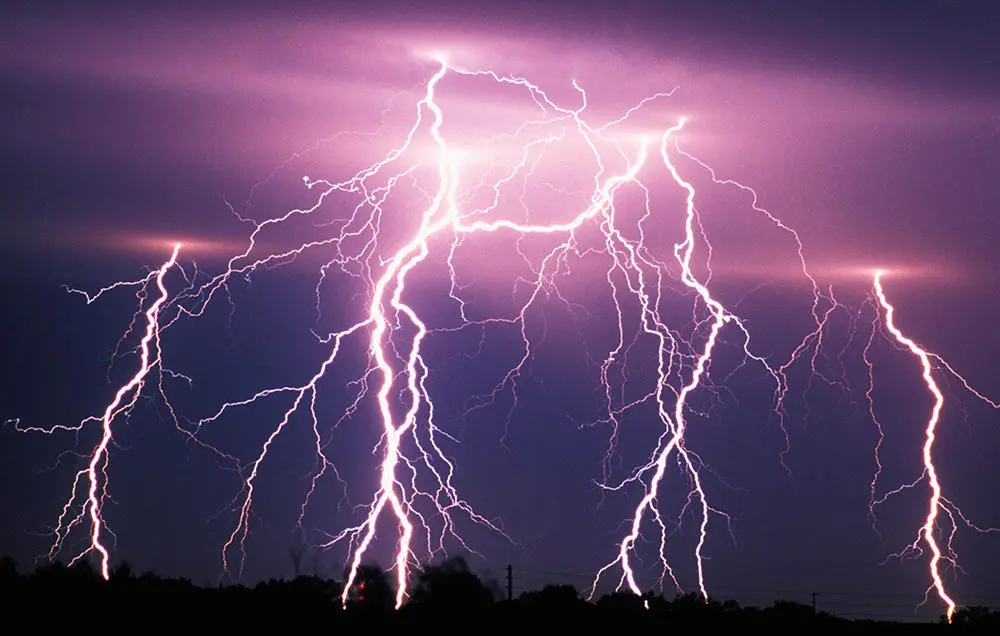
The Science Behind Lightning
Lightning is one of nature’s most spectacular displays of energy—a brilliant flash that illuminates the sky and captivates our imagination. Understanding the science behind lightning not only explains this dazzling phenomenon but also helps us appreciate its power and potential hazards. In this article, we delve into the physics of lightning, explore how it forms, and discuss its various types and impacts on our environment.
What Is Lightning?
Lightning is a sudden and powerful electrical discharge that occurs within a cloud, between clouds, or between a cloud and the ground. This rapid release of energy is the result of an imbalance of electrical charges built up in storm clouds. The flash we see is the visible part of this electrical energy finding a path to balance the charge difference.
How Does Lightning Form?
Lightning formation begins in thunderstorm clouds, known as cumulonimbus clouds. Here’s a breakdown of the process:
Charge Separation:
Within these storm clouds, collisions between ice particles and water droplets create a separation of electrical charges. Lighter ice particles tend to carry a positive charge and rise to the top of the cloud, while heavier water droplets carry a negative charge and sink to the bottom.Electric Field Buildup:
As the separation of charges increases, a strong electric field develops both within the cloud and between the cloud and the ground. When this electric field becomes sufficiently strong, it overcomes the insulating properties of air.Ionization of Air:
The strong electric field ionizes the air molecules, turning them into a conductive plasma. This process creates a path for the electrical discharge.Formation of a Stepped Leader:
A preliminary discharge, called the "stepped leader," forms as a series of ionized channels that zigzag downward from the cloud toward the ground. This path is not continuous, but rather a series of short bursts that create a conductive route.Return Stroke:
When the stepped leader nears the ground, an upward streamer from the ground meets it. This connection creates a full channel, and a powerful surge of electrical current—the return stroke—travels upward, producing the bright flash of lightning.
The Physics of Lightning
Understanding lightning requires a look at the fundamental physics behind electrical discharges:
Electric Charge and Fields:
The separation of charges in the cloud creates an electric field. When this field becomes strong enough, it ionizes the surrounding air, enabling electrons to flow rapidly and neutralize the charge imbalance.Plasma Formation:
The ionized air becomes a plasma, a state of matter in which electrons are stripped from atoms. This plasma channel conducts electricity and is responsible for the luminous nature of lightning.Energy Release:
A typical lightning bolt can release up to one billion joules of energy in just a few microseconds. This enormous energy release is what causes the rapid heating of air—up to 30,000 Kelvin—resulting in the familiar thunderclap as the air rapidly expands and contracts.
Types of Lightning
Lightning comes in several forms, each with distinct characteristics:
Cloud-to-Ground (CG) Lightning:
This is the most well-known type of lightning, where the discharge occurs between a cloud and the ground. CG lightning poses significant risks to life and property.Intra-Cloud (IC) Lightning:
The most common type, intra-cloud lightning, occurs within a single cloud when charges separate and discharge between different regions inside the cloud.Cloud-to-Cloud (CC) Lightning:
This type of lightning occurs between separate clouds, often seen during widespread storm activity.Ground-to-Cloud (GC) Lightning:
Although less common, ground-to-cloud lightning happens when the discharge originates from a tall structure or the ground and moves upward to meet the cloud.
Lightning and Thunder
The sound of thunder is intrinsically linked to lightning. When lightning strikes, the sudden heating of air causes a rapid expansion, generating shock waves that travel through the atmosphere as sound waves. The delay between the flash of lightning and the sound of thunder can also help estimate the distance of the storm—roughly one mile for every five seconds of delay.
Impacts of Lightning
Lightning has both beneficial and detrimental effects:
Natural Processes:
Lightning plays a crucial role in the nitrogen cycle by breaking apart nitrogen molecules in the air, which then combine with oxygen to form nitrates. These nitrates eventually fall to the ground and enrich the soil, benefiting plant life.Hazards and Safety Risks:
Despite its natural benefits, lightning is a major hazard. It can cause fires, damage electrical systems, and pose serious risks to human safety. Understanding lightning helps in developing better protection systems like lightning rods and early warning systems.Technological Applications:
Studying lightning and electrical discharges has led to advancements in high-voltage engineering and plasma physics. These insights are used in designing better surge protectors and improving weather prediction models.
Lightning Safety Tips
Given its potential dangers, it's essential to follow safety guidelines during a thunderstorm:
Seek Shelter:
Move indoors or to a hard-topped vehicle. Avoid open areas, tall objects, and isolated trees.Unplug Electronics:
To protect against power surges, disconnect sensitive electronics when a thunderstorm is imminent.Stay Away from Windows:
Avoid being near windows during a lightning storm, as lightning can strike glass surfaces.
Conclusion
The science behind lightning is a captivating blend of physics, meteorology, and natural phenomena. From the intricate process of charge separation in storm clouds to the explosive energy release that creates both light and thunder, lightning remains one of nature’s most powerful displays. Understanding this phenomenon not only deepens our appreciation for the natural world but also underscores the importance of safety measures during thunderstorms.