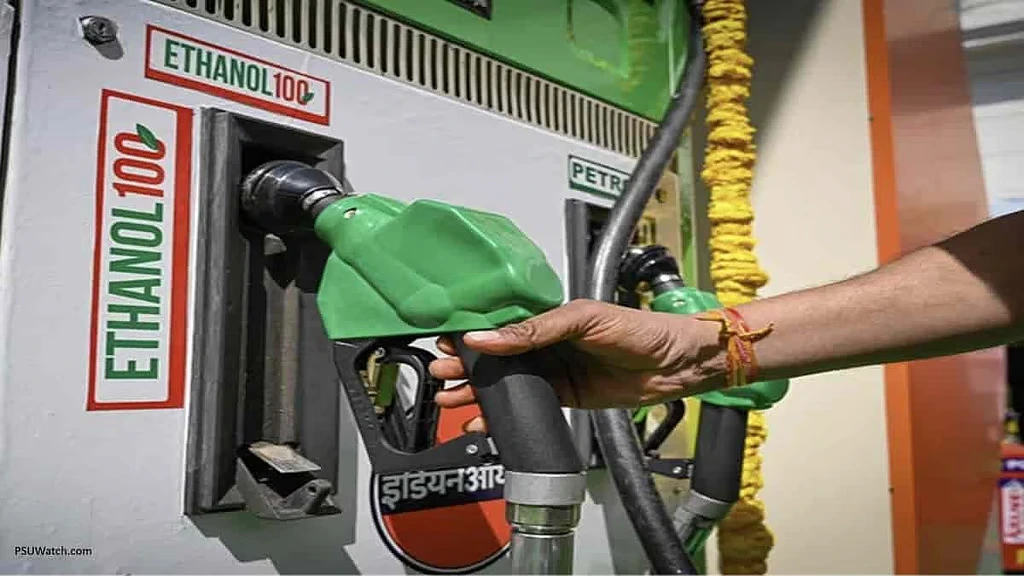
10 Myths About Ethanol Blending in India: Is E20 Petrol Really Bad for Your Vehicle?
E20 petrol has become one of the most debated fuel topics in India. Social media is full of claims that ethanol-blended petrol damages engines, cuts mileage drastically, attracts insects, ruins fuel tanks and benefits the government at the cost of vehicle owners.
But what does the evidence actually say?
E20 simply means petrol blended with 20% ethanol. India has pushed ethanol blending to reduce crude oil imports, support domestic fuel production, lower emissions and provide additional income opportunities to farmers. However, like most large policy changes, it has also created confusion among vehicle owners.
This article explains the major E20 petrol myths and facts in simple language.
What Is E20 Petrol?
E20 petrol is a fuel blend made of 80% petrol and 20% ethanol. Ethanol is an alcohol-based fuel produced through fermentation and industrial processing of feedstocks such as sugarcane, maize and surplus grains.
India’s ethanol blending roadmap proposed a phased move towards E20 fuel availability, and the country has moved ahead with this target as part of its Ethanol Blended Petrol programme.
Myth 1: E20 Reduces Mileage by 30%
One of the most viral claims is that E20 petrol reduces mileage by 30%. This is misleading.
The 30% figure refers to ethanol’s lower calorific value compared to petrol. It does not mean that your vehicle’s real-world mileage will fall by 30%.
Actual fuel efficiency depends on many factors, including:
- Driving style
- Tyre pressure
- Vehicle servicing
- Engine condition
- Traffic conditions
- AC usage
- Load in the vehicle
Automakers have acknowledged that some older vehicles may see a small mileage drop, but recent industry statements put this closer to around 3% to 3.5% for older vehicles, not 30%.
Myth 2: E20 Damages Engines, Especially Older Vehicles
Another common fear is that E20 petrol damages engines, fuel lines and other vehicle components.
So far, there is no widespread evidence of engine failure in India directly linked to E20 petrol. The auto industry has stated that E20 was tested with agencies and vehicle manufacturers before rollout. SIAM also said that the industry has worked on vehicle compatibility with specified blended fuels under the Ethanol Blended Petrol programme.
This does not mean every vehicle will behave exactly the same. Older vehicles may not be optimized for E20 in the way newer vehicles are. But the claim that E20 is causing mass engine damage is not supported by available evidence.
Myth 3: Ethanol Is a Low-Performance Fuel
Many people assume ethanol is a poor-quality fuel because it has lower energy content than petrol. But performance is not decided only by energy content.
Ethanol has a high octane rating. Higher octane fuel can support better combustion in engines designed or calibrated to take advantage of it. In E20-compatible vehicles, ethanol blending can help improve combustion quality, reduce knocking and support smoother engine performance.
This is why the debate around E20 should not be reduced to only “ethanol has less energy than petrol.” The more practical question is whether the vehicle is designed and calibrated for the fuel.
Myth 4: Insurance and Warranty Claims Will Be Rejected Due to E20
A major concern among vehicle owners is whether insurance companies or manufacturers will reject claims if a vehicle runs on E20 petrol.
Industry statements have clarified that the use of E20 fuel should not automatically void warranty or insurance in India. Reports quoting SIAM and industry representatives state that OEM warranties will be honoured for vehicles using spec-compliant E20 fuel.
However, users should still follow their vehicle manufacturer’s maintenance instructions and use fuel from reliable pumps. Damage caused by adulterated or contaminated fuel is a different issue from E20 itself.
Myth 5: E20 Petrol Should Be Much Cheaper
Some social media posts claim that ethanol is cheaper than petrol, so E20 fuel should cost less and the government is “pocketing” the difference.
This argument often refers to older cost assumptions. The NITI Aayog ethanol blending roadmap was published in 2021, when the economics of ethanol and petrol were different.
Fuel pricing depends on procurement cost, taxes, oil prices, ethanol supply cost, logistics and policy decisions. Ethanol blending is not only a pump-price decision. The government’s stated reasons include energy security, lower emissions and support for domestic agriculture.
Myth 6: The Government Called E20 an “Experiment” in Supreme Court
There were reports claiming that the government described the E20 programme as an “experiment” in the Supreme Court.
The Attorney General’s office later denied this claim and clarified that no submission was made saying the Ethanol Blended Petrol programme or E20 blending programme was an experiment.
The legal matter was related to ethanol procurement contracts, not a general admission that E20 was unsafe or experimental.
Myth 7: Sugarcane Juice Is Directly Mixed Into Petrol
Viral videos showing sugarcane juice being mixed with petrol are misleading.
Fuel ethanol is not raw sugarcane juice. Ethanol is produced through fermentation, distillation and industrial processing. By the time it is blended with petrol, it has completely different properties from raw juice and must meet fuel-quality specifications.
So, the idea that “sugarcane juice is being poured into petrol” is not accurate.
Myth 8: One Litre of Ethanol Consumes 10,000 Litres of Water
Another viral claim says that producing one litre of ethanol consumes 10,000 litres of water.
This mixes up different concepts. An ethanol plant’s process water requirement is much lower than the full agricultural water footprint of a crop. Modern distilleries also use systems such as Zero Liquid Discharge to reduce wastewater impact.
The wider water-use debate is valid, especially in a country like India where crop choices and irrigation matter. But attributing the entire water footprint of paddy or sugarcane cultivation directly to every litre of ethanol is an oversimplification.
The government has also stated that ethanol blending supports lower greenhouse gas emissions compared with petrol, citing NITI Aayog’s lifecycle assessment for sugarcane and maize-based ethanol.
Myth 9: Ants and Bees Gather Near Fuel Caps Because E20 Contains Sugar
This is one of the more colourful social media myths.
Fuel ethanol is distilled, which means residual sugars are removed. E20 petrol does not contain sugar like juice or syrup. Petrol also has a strong odour, and ethanol used for fuel contains denaturants that make it unsuitable for consumption.
So, ants and bees gathering near fuel caps cannot be explained by the idea that E20 contains sugar.
Myth 10: Ethanol Absorbs Water and Will Ruin Fuel Tanks
Ethanol is hygroscopic, which means it can absorb moisture. But this does not mean E20 will automatically spoil fuel tanks.
Keeping water out of any fuel tank is a basic requirement of vehicle and fuel-system design. Modern vehicles include design features to reduce water entry into fuel tanks. Fuel quality, storage and pump-level handling matter for all fuels, not just E20.
The real risk comes from contaminated fuel or poor storage practices, not from the mere presence of ethanol in a properly specified fuel blend.
Should Vehicle Owners Be Worried About E20 Petrol?
For most vehicle owners, there is no reason to panic. E20 may slightly affect mileage in some older vehicles, but the claim of a 30% mileage loss is exaggerated. Similarly, there is no evidence of mass engine failure due to E20 fuel in India.
That said, vehicle owners should follow a few practical steps:
- Use fuel from trusted petrol pumps
- Keep the vehicle serviced regularly
- Maintain correct tyre pressure
- Check the owner’s manual for fuel guidance
- Avoid long-term storage of fuel in rarely used vehicles
- Report any suspected contaminated fuel issue immediately
Final Verdict: E20 Debate Needs Facts, Not Fear
E20 petrol is not magic fuel, and it is not a disaster either. It has trade-offs. Some older vehicles may see a small mileage reduction, while newer E20-compatible vehicles are better suited for the blend.
The problem is that social media has turned a technical fuel policy issue into a fear-driven debate. Claims about 30% mileage loss, sugar in petrol, ants near fuel caps, rejected insurance claims and mass engine damage are either exaggerated or unsupported.
The correct approach is to understand E20 scientifically: it is a 20% ethanol-blended petrol introduced for energy security, emissions reduction and domestic biofuel production. Vehicle owners should stay informed, maintain their vehicles properly and rely on verified information rather than viral forwards.
FAQs on E20 Petrol in India
What is E20 petrol?
E20 petrol is a blend of 80% petrol and 20% ethanol.
Does E20 reduce mileage?
E20 can slightly reduce mileage in some vehicles, especially older ones, but the viral claim of 30% mileage loss is misleading.
Is E20 safe for old vehicles?
Industry bodies and automakers have stated that there is no widespread evidence of engine damage due to E20. However, older vehicles may not be as optimized for E20 as newer vehicles.
Will E20 void vehicle warranty?
Industry statements have clarified that warranties will be honoured for vehicles using spec-compliant E20 fuel.
Does E20 contain sugar?
No. Fuel ethanol is distilled and processed. It does not contain sugar like raw sugarcane juice.
Why is India using ethanol-blended petrol?
India is using ethanol blending to reduce crude oil imports, improve energy security, lower emissions and support domestic ethanol production.